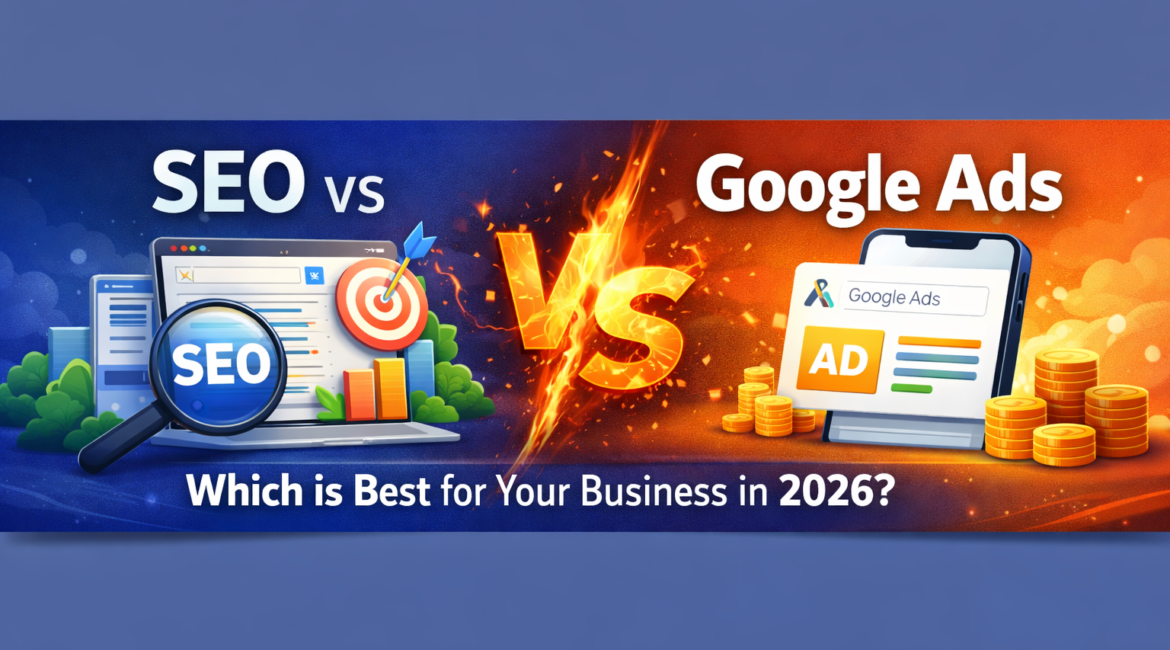
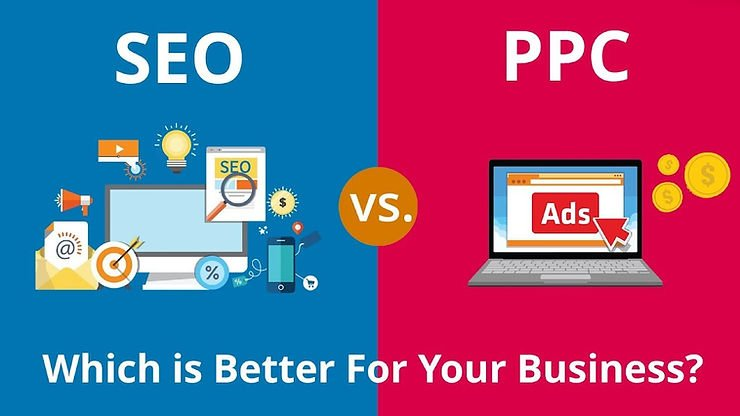
If you are a business owner today, you’ve likely asked yourself the million-dollar question: “Should I focus on showing up organically on Google, or should I just pay to be at the top?”
The digital landscape in 2026 is more competitive than ever. With the rise of AI-driven search results and shifting consumer habits, choosing where to put your hard-earned marketing budget isn’t just about “getting clicks” it’s about survival and growth. Deciding between SEO vs Google Ads can feel like a tug-of-war, but the truth is that the right choice depends entirely on your specific goals, timeline, and budget.
In this guide, we’ll break down the pros and cons of organic search vs paid search to help you decide which path is right for your business this year.
What is SEO? (The Long-Term Growth Engine)
Search Engine Optimization (SEO) is the process of improving your website to increase its visibility when people search for products or services related to your business in Google. This is known as organic search.
In 2026, SEO isn’t just about keywords; it’s about providing the best possible answer to a user’s question.
Key Benefits of SEO
- Trust and Credibility: Users tend to trust organic results more than sponsored ads. High rankings signal that you are an authority in your industry.
- Compounding ROI: Unlike ads, where the traffic stops the moment you stop paying, SEO builds “equity.” A blog post written today can bring in leads for years.
- Cost-Effectiveness: While SEO requires an investment in content and technical work, you don’t pay for individual clicks.
Key Limitations of SEO
- It Takes Time: You won’t see results overnight. It typically takes 4–6 months to see significant movement.
- Algorithm Changes: Google updates its system frequently, meaning you must constantly adapt to maintain your rankings.
What is Google Ads? (The Instant Visibility Boost)
Google Ads is a Pay-Per-Click (PPC) advertising platform. You bid on specific keywords, and Google places your website at the very top of the Search Engine Results Page (SERP) under a “Sponsored” tag.
Key Benefits of Google Ads
- Instant Results: Your ads can go live today, and you can start receiving traffic within minutes.
- Granular Targeting: You can target people based on their specific location, the time of day, and even the device they are using.
- Highly Scalable: If an ad is working well, you can simply increase your budget to get more leads instantly.
Key Limitations of Google Ads
- Cost per Click (CPC): In competitive industries, paying for every single click can become very expensive.
- Temporary: Once your daily budget is exhausted, your “storefront” disappears from the top of the page.
SEO vs Google Ads: At a Glance
| Feature | SEO (Organic Search) | Google Ads (PPC) |
| Primary Goal | Long-term authority & trust | Immediate leads & sales |
| Cost | Upfront investment in content/tech | Pay-per-click |
| Time to Results | 3 to 12 months | Instant |
| Sustainability | High (Results last long-term) | Low (Stops when budget stops) |
| Traffic Quality | Very High (Educational/Intent) | High (Transactional/Ready to buy) |
| ROI over Time | Increases as authority grows | Stable, but depends on ad spend |
The Cost Comparison: Short-Term vs. Long-Term
When asking, “Should I invest in SEO or PPC?”, you have to look at your cash flow.
Google Ads requires a continuous flow of cash. It is a “linear” investment: $1 in usually results in a predictable amount of traffic. This is great for new businesses that need sales right now to keep the lights on.
SEO, however, is a “compounding” investment. In the first three months, your cost per lead might look high because you are paying for work without seeing much traffic. But by month twelve, that same investment could be generating ten times the leads of a paid ad campaign, making the “cost per lead” significantly lower over time.
The Timeline: Patience vs. Speed
The biggest differentiator in the Google Ads vs SEO for small business debate is speed.
- Google Ads is a Sprint: Use it if you are launching a new product, running a seasonal sale (like Diwali or New Year offers), or need to fill your calendar for next week.
- SEO is a Marathon: Use it if you want to build a brand that dominates your local market for the next decade. SEO creates a “moat” around your business that competitors find hard to cross.
Best Use Cases: Which One Should You Choose?
Choose SEO if…
- You have a limited monthly budget but can afford a steady investment over time.
- You want to establish yourself as a thought leader in your niche.
- You want to lower your customer acquisition costs in the long run.
Choose Google Ads if…
- You have a high-margin product and need sales immediately.
- Your website is brand new and has zero authority.
- You are promoting a time-sensitive offer.
Better Together: Why Combining SEO + Google Ads Works Best
In 2026, the most successful businesses don’t choose one they use both. This is known as a “Holistic Search Strategy.”
- Dominate the SERP: If you have a paid ad and an organic listing on the same page, you occupy more “real estate,” making it much more likely a user will click on you.
- Data Sharing: You can use Google Ads to test which keywords result in actual sales. Once you find a winning keyword, you can then focus your SEO efforts on ranking for it organically.
- Remarketing: You can use SEO to bring people to your site for free, then use Google Ads to “follow” them around the internet with remarketing ads until they are ready to buy.
At Simba Squad, we don’t believe in one-size-fits-all marketing. We look at your business data to create a custom mix of both strategies that maximizes your ROI.
Conclusion: Making the Decision
So, SEO vs Google Ads which is the winner?
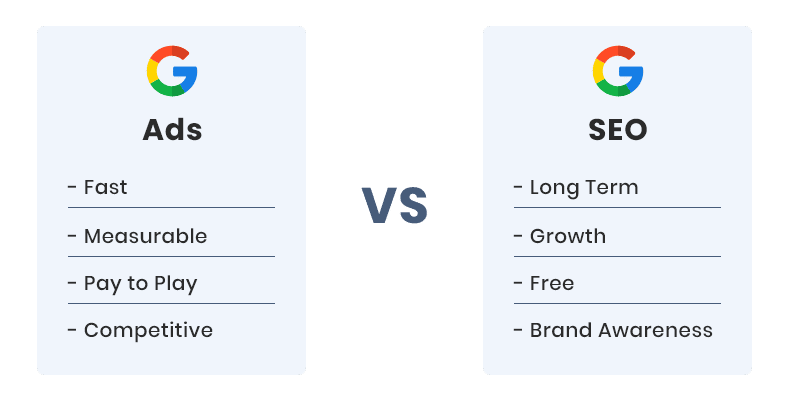
If you need results today and have the budget to pay for them, Google Ads is your best friend. If you want to build a sustainable, trustworthy brand that generates “free” leads in the future, SEO is the way to go.
Most small businesses find the most success by starting with a small Google Ads budget to get immediate momentum while simultaneously building their SEO foundation.
Frequently Asked Questions (FAQs)
1. Is SEO still worth it in 2026 with all the AI updates?
Absolutely. While AI (like Google’s SGE) has changed how results are displayed, users still look for expert, human-verified content. SEO in 2026 is about being the most helpful resource on the web.
2. How much should a small business spend on Google Ads?
It depends on your industry and location, but we generally recommend starting with a budget that allows for at least 10–20 clicks per day to gather enough data to optimize your campaign.
3. Can I do SEO and Google Ads myself?
You can, but both fields have become highly technical. Errors in Google Ads can lead to “wasted spend” very quickly, while poor SEO practices can lead to your site being penalized by Google.
4. Which provides a better ROI?
In the long run (12+ months), SEO almost always provides a higher ROI. However, in the first 3 months, Google Ads will likely have the better return.
Not sure where to start? Talk to our team and we’ll guide you.
Contact Simba Squad for a Free Strategy Consultation