
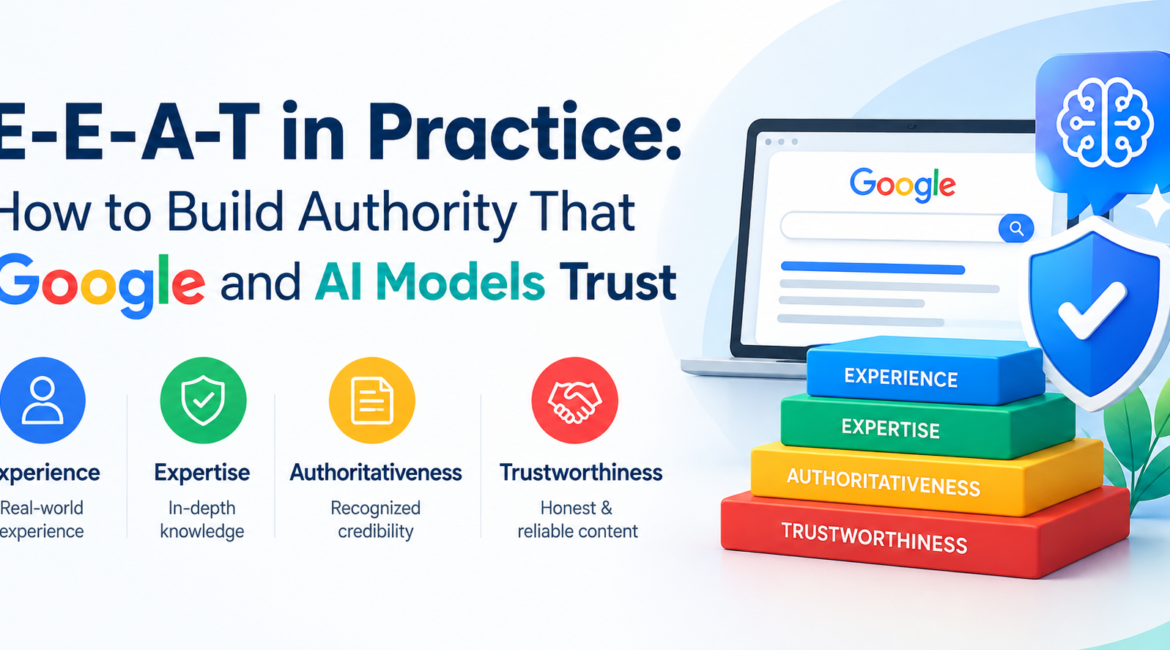
Most E-E-A-T advice stops at “add an author bio”. That’s a start, but it won’t convince Google or an AI tool that your business deserves trust. Real E-E-A-T is about proving, across your website and the wider web, that genuine people with real experience stand behind what you publish.
That proof matters more in 2026 than ever. Google uses it to judge quality, and AI tools like ChatGPT, Gemini and Perplexity look for the same signals when choosing which sources they can safely quote.
At Simba Squad, we build E-E-A-T into every content plan for clients across India, Australia, Canada, the UK and the US. Here’s what it looks like in practice, beyond the theory.
What Is E-E-A-T?
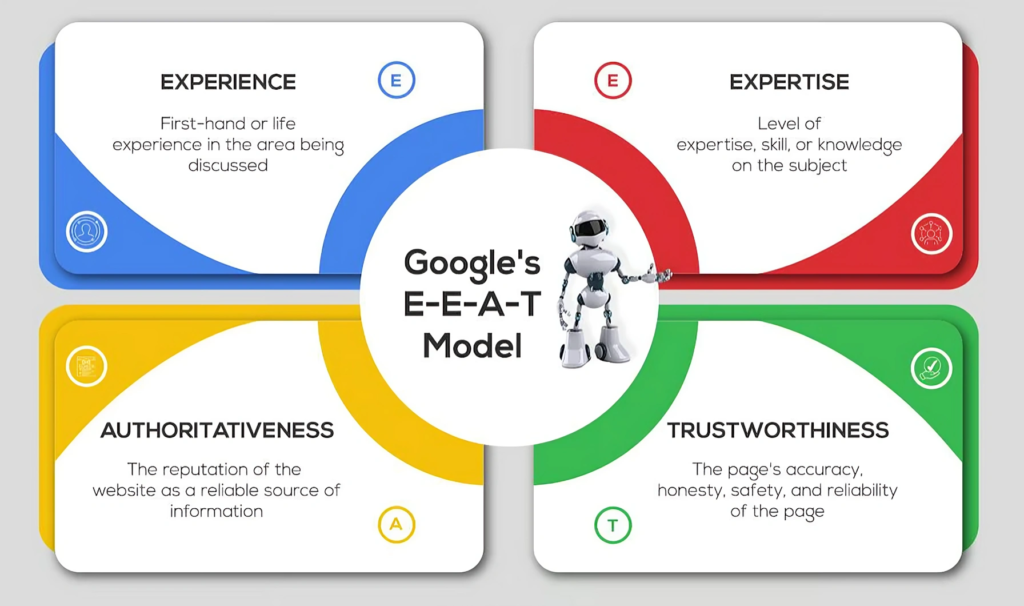
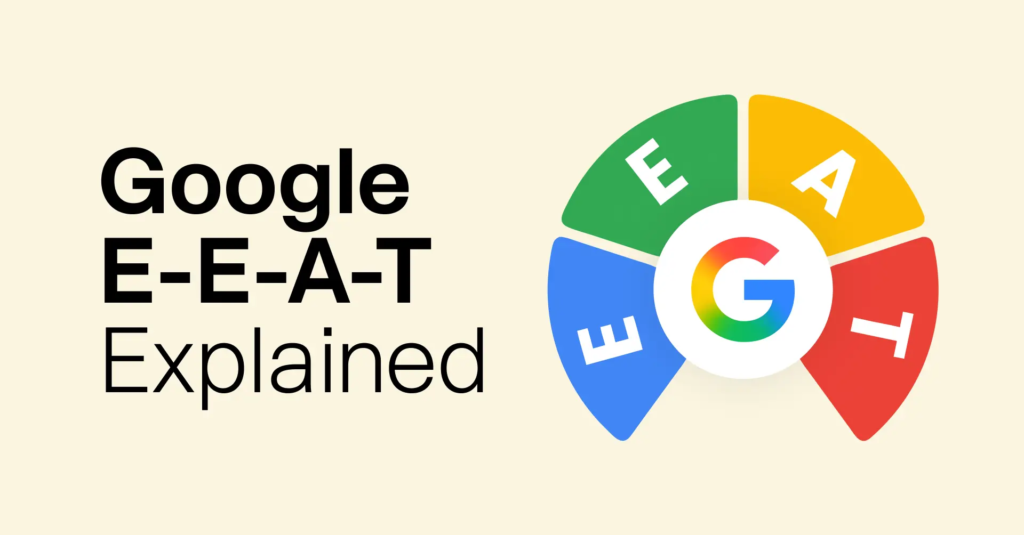
E-E-A-T stands for Experience, Expertise, Authoritativeness and Trustworthiness. It’s the framework Google’s quality raters use to assess whether content comes from a credible source. Google added the extra “E” for Experience in a December 2022 update to its rater guidelines, and it describes trust as the most important of the four.
• Experience: first-hand involvement with the topic, like actually using the product or doing the work.
• Expertise: the knowledge or skill needed to cover the topic well.
• Authoritativeness: recognition from others as a go-to source in your field.
• Trustworthiness: accuracy, honesty and transparency across everything you publish.
Is E-E-A-T a Ranking Factor?
Not directly. Google’s helpful content guidance says E-E-A-T itself isn’t a specific ranking factor. Instead, Google uses a mix of signals that help identify content showing strong E-E-A-T.
Quality raters don’t change rankings either. Their feedback, based on Google’s Search Quality Rater Guidelines, helps Google check whether its systems are surfacing trustworthy results. E-E-A-T carries the most weight on “Your Money or Your Life” (YMYL) topics like health, finance, legal and safety, where bad information can cause real harm.
Why E-E-A-T Matters for AI Search Too
AI tools face the same problem Google does: they need sources they can repeat without being wrong. Pages with named experts, sourced facts and a consistent reputation across the web are simply safer to cite.
Interestingly, that trust isn’t just about backlinks. Surfer’s 2026 study of around 9 million AI citations found that link-based authority metrics showed almost no correlation with whether a page was cited. Clear expertise and verifiable evidence did more of the work. We explain this further in our guide on how AI models choose what to cite.
How to Build E-E-A-T in Practice
1. Show First-Hand Experience
Experience is the hardest signal to fake, which is why it carries weight. Include photos of your own work, results from real projects, screenshots from tools you actually use and details only a practitioner would know. Phrases like “when we tested this for a client” backed by specifics beat generic advice every time.
2. Put Real Experts Behind Your Content
Every article should have a named author, not “Admin”. Give each author a bio with relevant credentials and experience, plus an author page linking to their LinkedIn profile. For YMYL topics, add a qualified reviewer, such as a chartered accountant reviewing a tax article.
3. Back Every Claim With a Source
Link statistics to the original research, add dates and quote recognised experts where it helps. The GEO research paper presented at KDD 2024 found that adding statistics, quotations and citations improved visibility in AI answers by up to 40%. Sourcing builds trust with readers and AI tools alike.
4. Build Authority Beyond Your Website
Authority comes from what others say about you. Aim for features in industry publications, podcast interviews, guest articles, conference talks and genuine participation in online communities. We cover the community side in detail in our guide to Reddit, Quora and forums for GEO.
5. Make Trust Easy to Verify
Trust is the core of E-E-A-T, so remove any doubt about who you are:
• A clear About page explaining who you are, where you’re based and who you serve
• A real address, phone number and contact details
• A team page with real names and photos, not stock images
• Reviews on Google Business Profile, Clutch or platforms your customers use
• Clear policies covering privacy, refunds or editorial standards where relevant
6. Keep Content Accurate Over Time
An outdated statistic or broken link quietly erodes trust. Review key pages regularly, correct errors openly and show a visible “last updated” date when you make genuine changes.
Who, How and Why: Google’s Simple E-E-A-T Test
Google’s helpful content guidance suggests asking three questions about every page:
• Who created it? Is it obvious who wrote it, with a byline and background available?
• How was it created? Is the process clear, for example how products were tested or where data came from?
• Why was it created? Is it mainly to help people, or mainly to attract search traffic?
If a page can’t answer all three clearly, it has an E-E-A-T gap.
Common E-E-A-T Mistakes to Avoid
• Publishing under “Admin” or a generic brand name with no real author
• Using stock photos or invented bios for your team
• Publishing AI-generated content with no human review or first-hand input
• Quoting statistics without linking to the source
• Hiding your address, phone number or company details
• Claiming credentials, awards or partnerships you can’t back up
How Simba Squad Builds E-E-A-T for Clients
At Simba Squad, E-E-A-T isn’t a checklist item we add at the end. Our content writing team in Ahmedabad works with your subject experts to capture real experience, source every claim and set up author pages, trust signals and off-site authority that both Google and AI tools recognise.
Frequently Asked Questions
What does E-E-A-T stand for?
E-E-A-T stands for Experience, Expertise, Authoritativeness and Trustworthiness. It’s the framework Google’s quality raters use to judge whether content comes from a credible, reliable source.
Is E-E-A-T a Google ranking factor?
Not directly. Google says E-E-A-T isn’t a specific ranking factor, but its systems use a mix of signals that help identify content with strong experience, expertise, authority and trust.
What is YMYL content?
YMYL stands for “Your Money or Your Life”. It covers topics like health, finance, legal and safety, where inaccurate information could seriously affect someone. Google applies a higher standard of E-E-A-T to these topics.
Does AI-generated content hurt E-E-A-T?
Not by itself. Google focuses on content quality rather than how it was produced. But AI content without human expertise, first-hand experience or fact-checking usually lacks the signals that build E-E-A-T.
How long does it take to build E-E-A-T?
On-site improvements like author bios, sourcing and trust pages can be done in weeks. Off-site authority, such as press mentions and community reputation, builds over months of consistent effort.
Does E-E-A-T matter for small local businesses?
Yes. For local businesses, E-E-A-T shows up as genuine reviews, a complete Google Business Profile, real team photos and clear contact details. These signals help both local rankings and customer trust.
Find Out How Much Trust Your Website Signals
Google and AI tools can’t trust a business they can’t verify. The good news is that most E-E-A-T gaps are fixable, and fixing them helps your rankings, your AI visibility and your conversions at the same time.
Get a free E-E-A-T audit from Simba Squad. We’ll review your content, authors and trust signals and show you exactly what to strengthen first.