Organic growth used to be simple: rank on page one and collect the clicks. In 2026, a customer might see your brand in a Google AI Overview, hear about you in a ChatGPT answer and read about you in a Reddit thread before they ever visit your website.
That changes what organic website growth means and how you measure it. Traffic still matters, but it’s no longer the whole scoreboard. Visibility across Google and AI search, and how well that visibility turns into leads, matters just as much.
At Simba Squad, we’ve rebuilt our SEO approach around this shift for clients across India, Australia, Canada, the UK and the US. Here’s how organic growth works now, and a practical plan to win it.
What Does Organic Growth Look Like in 2026?
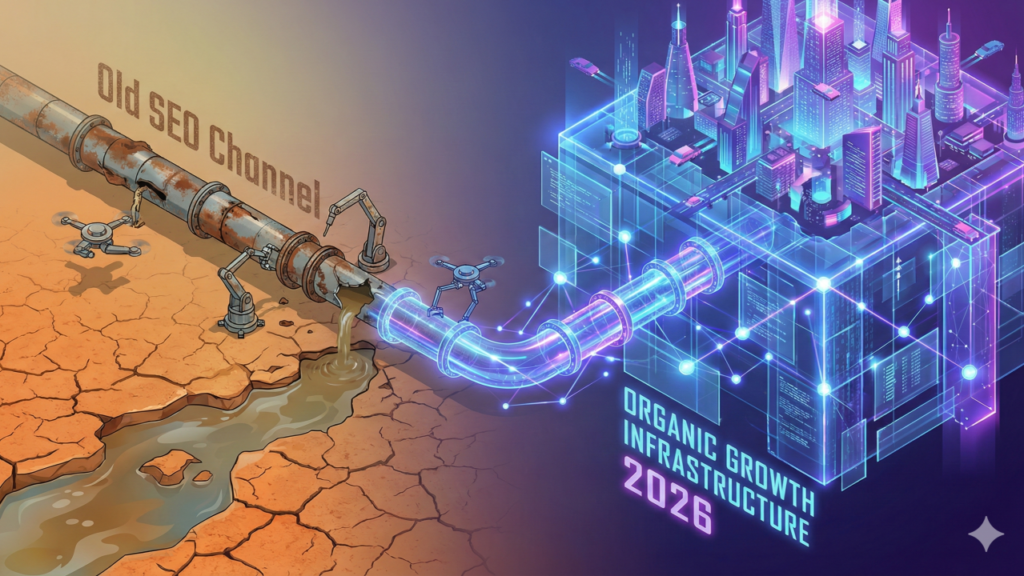
Organic growth in 2026 means earning unpaid visibility across both traditional search results and AI-generated answers, then turning that visibility into leads. It includes website traffic from Google, citations and brand mentions in tools like ChatGPT and Perplexity, and the branded searches that follow when people discover you through AI.
How AI Search Is Changing Organic Traffic
AI summaries are changing how people click. A Pew Research Center study found that users were less likely to click on a search result when an AI summary appeared on the page.
At the same time, AI tools look well beyond the top results. Moz research across nearly 40,000 queries found that 88% of links cited in Google’s AI Mode didn’t appear in the organic top 10 for the same keyword. That opens doors for businesses that aren’t ranking first yet.
The result is fewer casual clicks but more qualified ones. Someone who clicks through from an AI answer has often already compared options and is closer to buying.
The Four Channels of Organic Growth
1. Traditional Google Rankings
Classic search results are still a major source of organic traffic, especially for local and transactional searches. Strong technical SEO, relevant content and quality links remain the foundation everything else is built on.
2. Google AI Overviews and AI Mode
Google’s guidance on AI features confirms there are no special requirements for appearing in AI Overviews or AI Mode. Indexed, well-structured pages that answer questions clearly are the ones that get pulled in.
3. AI Assistants Like ChatGPT, Perplexity, Gemini and Claude
These tools cite sources when they answer questions, and every citation is a chance to be seen and clicked. Our guide on how to get your brand cited in AI-generated answers covers this channel step by step.
4. Communities and Third-Party Websites
AI tools lean heavily on what other people say about you. Peec’s analysis of 30 million AI-cited sources found Reddit was the most-cited domain overall, with YouTube, LinkedIn and Wikipedia close behind. We explain how to build that presence in our guide to Reddit, Quora and forums for GEO.
A Practical Plan to Grow Organic Traffic in 2026
Step 1: Fix Your Technical Foundation
Make sure your site is fast, mobile-friendly and easy to crawl. Check that robots.txt doesn’t block Googlebot or AI search crawlers like OAI-SearchBot and PerplexityBot.
Step 2: Build Content Around Buyer Questions
Map the questions customers ask at every stage, from early research to comparing providers. Group them into topic clusters and answer each one directly near the top of the page.
Step 3: Prove Your Expertise
Use named authors, first-hand examples and sourced facts. Google and AI tools both favour content that clearly comes from people who know the subject.
Step 4: Earn Mentions Beyond Your Website
Contribute to communities, get featured in industry publications and collect genuine reviews. Independent mentions build the trust that AI tools look for.
Step 5: Keep Key Pages Fresh
An Ahrefs study of 17 million citations found AI assistants cite content that is about 25.7% fresher on average than pages in organic results. Refresh pages with statistics, prices or time-sensitive advice regularly.
Step 6: Turn Visibility Into Leads
Traffic only matters if it converts. Give every important page a clear next step, keep forms short and, if you serve local customers, keep your Google Business Profile complete and active.
How to Measure Organic Growth Now
| Metric | Where to track it | Why it matters |
| Clicks and impressions | Google Search Console | Shows overall search visibility, even when clicks dip |
| Branded searches | Google Search Console | Rises when people discover you through AI and come looking |
| AI referral traffic | GA4 (chatgpt.com, perplexity.ai and similar) | Shows direct visits from AI tools |
| AI mentions | Monthly prompt tests or AI visibility tools | Shows whether AI names your brand |
| Organic leads | GA4 conversions, CRM | The number that actually pays the bills |
Common Organic Growth Mistakes
• Chasing traffic volume instead of leads
• Ignoring AI search because it’s “not big yet”
• Publishing generic AI-written content with no real expertise
• Focusing only on your own website and ignoring third-party mentions
• Judging results after a few weeks instead of several months
How Simba Squad Drives Organic Growth
At Simba Squad, we plan organic growth across all four channels at once. Our team in Ahmedabad handles technical SEO, content, off-site visibility and reporting, so every piece of work connects back to traffic, mentions and leads.
Explore our SEO services to see how we build organic growth that holds up in both Google and AI search.
Frequently Asked Questions
Is organic traffic declining because of AI search?
For some types of searches, yes. Pew Research found people click less often when an AI summary appears. But the clicks that do come through are often better qualified, and AI citations bring visibility of their own.
How long does organic growth take?
Google’s own guidance says SEO usually takes four months to a year to show benefits. Local businesses and less competitive industries often see progress sooner.
Can AI search tools send traffic to my website?
Yes. ChatGPT, Perplexity, Gemini and Google’s AI features all link to the sources they cite. You can track this traffic in GA4 by looking at referrals from those platforms.
Is SEO still worth investing in for 2026?
Yes. AI tools draw on search indexes and well-optimised websites, so SEO is the foundation for AI visibility too. What has changed is how SEO is done and how results are measured.
Which matters more, traffic or brand mentions?
Both, but leads matter most. Brand mentions in AI answers build awareness and trust, while traffic gives you the chance to convert. A good strategy tracks both and ties them to real enquiries.
How do I know if AI tools mention my business?
Test 15 to 20 buyer questions in ChatGPT, Gemini, Perplexity and Google AI Mode every month and note whether your brand appears. AI visibility tools can automate this for larger sites.
Ready to Grow Across Google and AI Search?
Organic growth hasn’t disappeared. It has spread across more places. The businesses winning in 2026 show up in search results, AI answers and online communities, and they turn that visibility into real leads.
Get a free organic growth audit from Simba Squad. We’ll show you where you appear today across Google and AI search, and what to do next.