Your next client might never see your website. They’ll ask ChatGPT, Gemini, Perplexity or Google’s AI Mode for a recommendation, read the answer, and shortlist whichever brands the AI names. If yours isn’t one of them, you’ve lost the lead before the click.
That’s why learning how to get your brand cited in AI-generated answers has become a core part of SEO in 2026. And it’s not the same job as ranking on page one. Moz research covering nearly 40,000 queries found that 88% of the links cited in Google’s AI Mode didn’t appear in the organic top 10 for the same keyword.
At Simba Squad, we’ve reworked how we plan SEO and content for clients across India, Australia, Canada, the UK and the US around this shift. Below is the playbook we use, in plain English.
What Is an AI Citation?
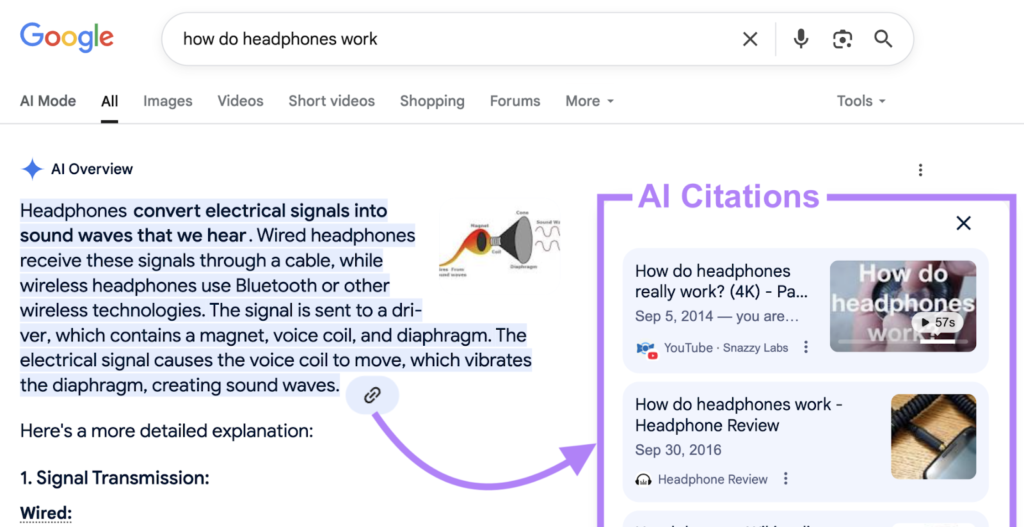
An AI citation is a link or named reference to your brand inside an answer generated by an AI tool such as ChatGPT, Google AI Overviews, AI Mode, Gemini, Perplexity or Claude. The AI uses your page as evidence for part of its answer, and the reader sees your brand as a trusted source.
There are two types worth tracking:
• Linked citations: your URL shows up as a source card, footnote or link beside the answer.
• Brand mentions: the AI names your business in the answer itself, even without a link. To a buyer, this often reads like a direct recommendation.
If you want the technical side of how models make that choice, read our guide on how AI models choose what to cite.
Why Getting Cited in AI Answers Matters in 2026
AI summaries are now part of everyday search. A Pew Research Center study found that 58% of the US adults it tracked ran at least one Google search in a single month that produced an AI summary, and they were less likely to click a result when one appeared.
In practice, the AI answer is becoming the first impression. Buyers compare options, check credibility and build shortlists inside it. A citation puts you in that conversation. Without one, someone else is shaping how your market sees your category.
How to Get Your Brand Cited in AI-Generated Answers: 8 Steps
1. Make Sure AI Search Tools Can Reach Your Pages
Everything starts with access. Google’s guidance on AI features says there are no extra requirements to appear in AI Overviews or AI Mode. Your page needs to be indexed and eligible to show a snippet, so solid technical SEO still comes first.
Beyond Google, check that your robots.txt isn’t blocking search crawlers like OAI-SearchBot (ChatGPT), PerplexityBot or Claude-SearchBot. Also make sure your key content loads in the page HTML, not only after JavaScript runs.
2. Answer the Question in the First Two Lines
AI tools lift short passages, not whole pages. Use question-style headings and put a clear 40 to 60 word answer directly under each one, then add the detail. If a reader could copy your first two sentences and get a complete answer, so can an AI.
3. Back Your Claims With Facts AI Can Stand Behind
Vague statements rarely get cited. Specific ones do. The GEO research paper presented at KDD 2024 found that adding statistics, quotations and source citations improved content visibility in generative engine answers by up to 40%.
Use real numbers, name your sources, add dates and quote people with genuine expertise. Every claim should be something the AI can safely repeat.
4. Publish Something Only You Can Say
If your brand is the only source of a data point, an AI has little choice but to cite you when that topic comes up. Original research doesn’t need a big budget. Anonymised client findings, pricing benchmarks from your own projects or a short industry survey all work.
5. Get Your Brand Mentioned Beyond Your Own Website
AI models give more weight to claims that appear in more than one place. That makes your off-site presence just as important as your blog. Focus on:
• Genuinely helpful answers on Reddit and Quora in your niche
• LinkedIn posts and articles from your founders and team
• YouTube videos that explain your product or service clearly
• Guest articles, interviews and features in industry publications
• Reviews on Google Business Profile, Clutch, G2 or the platforms your buyers use
6. Make Your Brand a Clear, Consistent Entity
AI systems build a profile of who you are, what you do and who you serve. Help them by describing your business the same way everywhere: your About page, Google Business Profile, LinkedIn and directory listings.
Organization schema with sameAs links to your profiles helps connect the dots, but don’t treat it as a shortcut. A controlled experiment reported by GrowthX tracked 1,885 pages that added JSON-LD schema and found no major citation uplift on any platform.
7. Cover the Whole Topic, Not One Keyword
Google’s AI Mode breaks one question into several related searches behind the scenes, a process Google calls query fan-out. A page built around one keyword covers one of those searches at best. A cluster of pages covering the main topic, its sub-questions and comparisons gives the AI more reasons to land on you.
8. Keep Your Content Fresh
Outdated pages lose out to newer ones making the same point with current data. Review your key pages every quarter, refresh statistics and examples, and show a visible “last updated” date.
Common Mistakes That Keep Brands Out of AI Answers
• Blocking AI crawlers by accident through robots.txt or a firewall setting
• Vague About pages that never plainly state what you do, where and for whom
• Hiding key information inside PDFs, gated downloads or images of text
• Chasing quick fixes like llms.txt files, which no major AI search engine has confirmed it relies on
• Making claims without sources, which gives the AI nothing it can verify
How Do You Check Whether AI Tools Are Citing Your Brand?
Start with a simple monthly test. Write 15 to 20 prompts your buyers would realistically ask, run them in ChatGPT, Gemini, Google AI Mode, Perplexity and Claude, and note whether your brand is named or linked and which competitors show up.
Run each prompt more than once, since AI answers change between sessions. Then check GA4 for referral traffic from sources like chatgpt.com and perplexity.ai. For larger sites, AI visibility tools from platforms such as Semrush and Ahrefs can automate the tracking.
How Simba Squad Helps Brands Get Cited by AI
At Simba Squad, we treat AI visibility as part of SEO, not a passing trend. From our base in Ahmedabad, our team combines technical SEO, content writing and off-site brand building so your business shows up wherever buyers ask questions, whether that’s Google, ChatGPT or Perplexity.
We work with businesses and agencies across India, Australia, Canada, the UK and the US, and we measure progress against real buyer prompts, not guesswork. See how we approach it on our SEO services page.
Frequently Asked Questions
How long does it take to get cited in AI answers?
It depends on your starting point. If your site is already indexed and well structured, improved pages can start appearing in AI answers once they’re recrawled. Building the off-site mentions behind consistent citations usually takes a few months of steady work.
Do I need to rank on Google’s first page to be cited by AI?
No, but it helps. Google’s AI features draw from its search index, so strong SEO improves your chances. Moz found that 88% of AI Mode citations came from pages outside the organic top 10, which shows AI tools look well beyond page one.
Can small businesses get cited by ChatGPT and Google AI?
Yes. AI tools choose citations page by page, so a small business with a clear, specific, well-sourced page can be cited ahead of a bigger brand with a generic one. Local businesses also benefit from a complete Google Business Profile and genuine reviews.
Is generative engine optimization different from SEO?
Generative engine optimization (GEO) builds on SEO rather than replacing it. SEO gets your pages found and indexed. GEO focuses on making those pages easy for AI tools to quote and on building the brand mentions AI uses to judge trust.
Does schema markup help my brand get cited by AI?
Schema helps search engines understand your business, but on its own it’s unlikely to change how often you’re cited. Treat it as groundwork that supports clear content, sourced facts and off-site mentions.
Which AI platforms should my business focus on first?
Start with Google AI Overviews and AI Mode, since they sit inside the search engine most customers already use. Then track ChatGPT, Perplexity, Gemini and Claude, and prioritise whichever ones your buyers actually mention using.
Ready to Get Your Brand Into AI Answers?
Every month you’re missing from AI answers, a competitor is being introduced to your buyers instead. The brands getting cited today aren’t always the biggest. They’re the clearest, the most specific and the easiest to trust.
Book a free AI visibility consultation with Simba Squad. We’ll run your key buyer prompts, show you where you stand and map out what to fix first.