
1. Why AI Search Has Changed the Game
Think back to how people used Google just three years ago. They’d type in a query, scan a list of results, and click through to websites.
That behaviour is changing fast.
Today, a growing percentage of searches are answered before the user ever clicks anywhere. Google’s AI Overview summarises the answer right at the top of the page. ChatGPT pulls together information from across the web and gives you a complete response in seconds. Perplexity AI works like a research assistant reading multiple sources and presenting a neat, cited summary.
For businesses and content creators, this creates a real challenge: if your content isn’t the one AI is drawing from, you’re invisible.
This is where Answer Engine Optimisation (AEO) comes in. AEO is the practice of shaping your content so that AI systems choose to feature it, cite it, and present it as the authoritative answer to a question.
At Simba Squad, we work with clients across India, Australia, and beyond to do exactly this. This guide shares everything we know about making your content AI-ready in 2026.
2. What Exactly Are AI Overviews?

Google’s AI Overview is the AI-generated summary block that appears at the very top of Google search results for many queries. Instead of sending you to a website, it gives you a direct answer and lists the sources it drew from. If your website is one of those sources, you get a prominent citation and users who want to learn more will often click through to you.
AI Overviews tend to appear on:
• Informational questions (‘how does X work’, ‘what is Y’)
• How-to searches (‘how to rank on Google’)
• Comparison questions (‘X vs Y — which is better’)
• Definition-type questions
The goal for any business is to be the source Google’s AI trusts enough to cite. That trust comes from clarity, structure, demonstrated expertise, and accuracy not just the number of times a keyword appears on the page.
3. How ChatGPT & Perplexity AI Find Their Answers
ChatGPT
ChatGPT and similar AI tools were trained on large amounts of text from the internet. When you ask them a question, they generate an answer based on patterns learned during that training.
However, more recent versions of ChatGPT can also browse the live web in real time. When a user asks about something current or specific, ChatGPT runs a search, reads the results, and produces an answer sometimes citing those sources directly.
To get featured, your content needs to:
• Rank well in organic search results (which is what ChatGPT searches when it browses the web)
• Be structured clearly so the AI can extract specific facts
• Be widely referenced, which signals credibility
Perplexity AI
Perplexity works differently. It browses the live web on every single query. It then pulls facts and quotes from multiple pages and displays them with direct source links much like a mini bibliography.
This means every search is a fresh opportunity for your page to be discovered and cited. Perplexity tends to favour pages that:
• Provide clear, factual answers quickly
• Are well-structured with defined sections
• Come from websites with established credibility
4. The Key Signals That Make AI Pick Your Content
AI systems don’t choose sources at random. There are consistent patterns in what gets cited. Here’s what matters most:
Topical authority. Does your website have real depth on this subject? A page about AI Overviews on an SEO-focused website carries more weight than the same page on a general news blog. Build a body of content around your core topics over time.
Direct, clear answers. AI wants to extract a specific answer to a specific question. If your page spends three paragraphs building up to the point, it won’t be chosen. Lead with the answer, then expand on it.
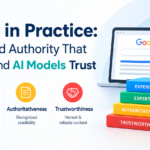
Demonstrated expertise. Google and other AI systems reward content written by people who actually know their subject. This means proper author information, references to real experience, original data, and a track record of accurate content. Google calls this E-E-A-T: Experience, Expertise, Authoritativeness, and Trustworthiness.
Fresh, up-to-date content. AI systems are less likely to cite a page last updated in 2021. Regular updates to your content even small ones signal that the information is still relevant and accurate.
Clear formatting. Bullet points, numbered lists, clear headings, comparison tables — these help AI read and extract information. A wall of unbroken text is hard for both humans and machines to process.
Structured data markup. Adding structured data (a piece of code that tells search engines precisely what your content is about) helps AI understand your page more accurately. FAQ, How-To, and Article markup are all worth implementing.
5. How to Write Content That Gets Cited by ChatGPT
| The single most important principle: write to be the most reliable, clear, and concise source on your topic. |
Start With the Answer
Every section of your content should open by directly addressing the question the heading poses. Don’t build up to the answer give it first, then support it with context and explanation.
Use a Clear, Predictable Structure
Think about how a textbook is laid out: a title, an introduction, numbered chapters, each with a clear heading and a defined point. AI systems respond well to this kind of structure because it makes information easy to locate and extract.
Back Every Claim
If you make a claim, support it with data, a study, or a logical explanation. Vague or unsupported statements reduce your credibility as a source for both human readers and AI systems.
Use Lists and Tables Where Appropriate
When explaining a process, a comparison, or a set of options use a numbered list or a table. These formats are easy for AI to lift and present cleanly in a summary.
Build Internal Links Strategically
A strong internal linking structure where your pages connect to related content across your website signals to AI that your site has real depth on a topic. If your article on AI Overviews links to related posts on content strategy and technical website health, that web of content reinforces your authority.
Aim to Become the Reference Source
The pages AI learns from are the ones that get referenced widely across the web. That means earning links from other websites, getting cited in forums and industry discussions, and building a reputation as the go-to resource in your niche.
6. How to Get Featured on Perplexity AI
Perplexity’s approach to citing sources is more transparent than Google’s, which actually makes it easier to optimise for. When Perplexity cites a page, it’s almost always because that page provided the clearest, most direct answer available.
Answer the Question in the First 100 Words
Perplexity often pulls from the opening paragraph or the most relevant summary section of a page. If your best answer is buried 800 words in, it’s far less likely to be featured. Front-load your most important content.
Use Question-Based Headings
Structure your content so that each section heading is a question your reader might actually type into Perplexity. Then answer it immediately below. This makes it easy for Perplexity to match your content to specific queries.
For example:
• Less effective: ‘Our Approach to Keyword Research’
• More effective: ‘How Should I Do Keyword Research for a New Website?’
Make Facts Easy to Extract
Perplexity loves specific, verifiable facts. Using precise figures citing a specific percentage or statistic with its source makes your content far more citable than vague generalisations. Always attribute statistics to their original source.
Keep Your Introductions Sharp
When Perplexity reads a page, it often pulls from the start of a section. Avoid lengthy preambles. Get to the substance quickly and keep background context for later in the paragraph.
Add Original Insight
If your content just restates what everyone else has already said, there’s no reason for Perplexity to choose your page over five others. Add something original a real client example, a test you’ve run, a perspective from your own experience. Original observations stand out.
7. Technical Checklist for AI Visibility
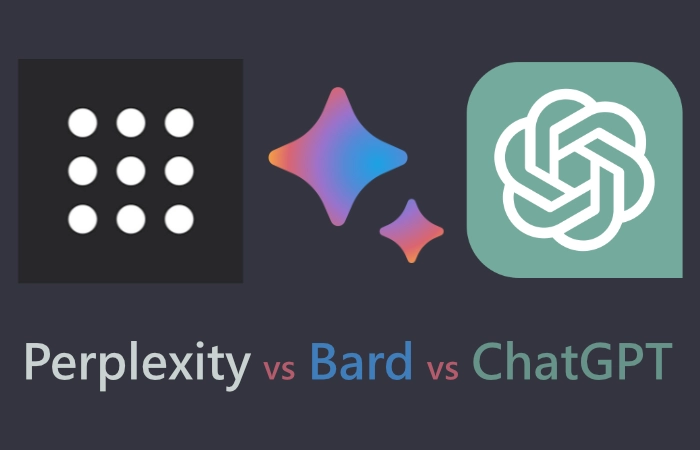
Even brilliant content can’t be cited if AI systems can’t properly access and interpret your website. Here’s the technical foundation you need:
Structured data markup. At minimum, implement Article, FAQ, and Breadcrumb markup on your blog posts. For how-to content, add step-by-step markup with the proper structure. This gives AI a direct, machine-readable understanding of your content.
Page speed. A slow website signals poor quality to both search engines and AI crawlers. Aim for fast loading times on both desktop and mobile. Google’s free PageSpeed Insights tool will highlight the specific issues affecting your site.
Mobile experience. Google ranks and indexes your website based on its mobile version first. If your site is difficult to read or navigate on a phone, your content is being penalised before AI even gets to evaluate it.
Crawlability. Make sure your robots.txt file (the file that tells Google which pages to read) hasn’t accidentally blocked key pages. Keep your sitemap the list of all your website’s pages — updated and submitted to Google Search Console.
HTTPS security. If your site is still on HTTP, fix this immediately. A secure connection is a basic trust signal for both visitors and automated systems.
Clean page structure. Use heading tags (H1, H2, H3) in a logical hierarchy. Well-structured pages are significantly easier for AI to read and understand than pages built with complex or unconventional layouts.
8. How to Measure If It’s Working
AEO is a newer practice, so measurement tools are still developing. But here’s how to track your progress:
Google Search Console. Monitor impressions and clicks from AI Overview-related features. As Google expands its reporting, you’ll be able to see which queries are triggering your AI citations.
Manual Perplexity checks. Regularly search for your target keywords on Perplexity and note whether your site is being cited. Keep a simple tracker date, query, cited or not. Over time, you’ll see which types of content earn citations most consistently.
Brand mention tracking. Use a free tool like Google Alerts to track when your website is referenced across the web. Growing brand mentions are a leading indicator that your authority is rising and AI systems will follow.
Featured snippet performance. If you’re winning featured snippet boxes on Google (the highlighted answer block at the top of results), your content is structured in exactly the way AI systems prefer. Monitor your snippet count in Search Console or Ahrefs as a useful indicator of AEO readiness.
Organic traffic trends. Compare traffic to your most thoroughly optimised pages. Pages cited in AI Overviews often see a combination of stable organic traffic plus new visitors discovering them through AI-generated answers.
9. Real Example: What a Great AEO Page Looks Like
Let’s say you run a website for a local accounting firm and want to rank in AI Overviews for the question ‘how to register a business in Australia.’
A traditional approach might produce a 2,000-word article with keyword-rich paragraphs and some subheadings. That might rank, but it won’t necessarily get cited by AI.
An AEO-optimised version of that same page would look different:
• Opening paragraph: A direct answer — ‘Registering a business in Australia involves choosing a business structure, applying for an ABN, registering your business name with ASIC, and meeting your state’s local licensing requirements.’
• Structure: Each step as a clear subheading, with a concise explanation under each one
• Structured data markup: Step-by-step markup applied to the entire process
• FAQs at the bottom: With FAQ markup, covering the most common follow-up questions
• Author bio: Written by someone with verifiable relevant expertise
This kind of page doesn’t just rank it becomes the source AI systems draw from. The result is citations across Google AI Overviews, Perplexity, and potentially ChatGPT’s live browsing results.
10. What’s Coming Next in AI Search
The pace of change in AI search is fast. Here’s what we’re watching at Simba Squad:
Multimodal search. AI is increasingly combining text, images, and video to form answers. Pages that include original visuals, diagrams, or video will have an advantage as these systems evolve.
Personalised AI answers. As AI models get access to more user data, results will become more personalised. Building a recognisable, trusted brand will matter more than ever.
Voice and conversational search. Smart speakers and AI assistants are growing in India, Australia, and globally. Content that reads naturally and answers conversational questions will be better positioned for these interfaces.
Citations as the new currency. In traditional search, rankings were the goal. In AI search, getting cited is the goal. The businesses that build a reputation as reliable, frequently-cited sources will lead the next era of search.
AEO is not a passing trend. It’s the foundation of what search visibility looks like from here on. The businesses building for it now will have a significant head start.
11. Frequently Asked Questions
What is AEO and how is it different from regular search optimisation?
Traditional search optimisation focuses on ranking your pages in Google’s list of results. AEO (Answer Engine Optimisation) focuses on getting your content cited directly by AI systems like Google’s AI Overview, ChatGPT, and Perplexity AI so your brand gets featured even when users never scroll to the regular results.
Does strong traditional search optimisation automatically mean good AEO?
Partly. A credible website with strong technical foundations and demonstrated expertise all help with AEO too. But AEO requires additional steps direct answers, clear structure, structured data markup, and factual precision that traditional optimisation doesn’t always prioritise.
How long does it take to see results from AEO?
Most clients we work with see measurable improvements in AI citation frequency within two to four months of consistently optimising their content. The timeline depends on your website’s existing authority, content quality, and how competitive the topic is.
Will AI Overviews reduce traffic to my website?
For purely informational queries, some users will get their answer without clicking through. But being cited by AI also builds brand recognition and drives clicks from higher-intent users who want to go deeper. The goal is to become the trusted source AI consistently points to.
Can Simba Squad help with AEO for my business?
Absolutely. Our SEO and content services cover everything from technical markup implementation to restructuring content for AI visibility. Get in touch at simbasquad.com/contact or call +91 96647 72676 to discuss your goals.