Picture this: a small HVAC company in Atlanta. They’ve been running Google Ads for three years. The leads come in but so do the invoices. Their cost per click has climbed from $12 to $31 in two years. Their monthly ad spend is now $4,800, and the moment they pause for a slow week, the phone stops ringing entirely.
This story is playing out across thousands of US small businesses right now. Google Ads costs have risen sharply across most industries as more businesses compete for the same search positions. And unlike organic search visibility, paid ads deliver nothing once the budget is gone.
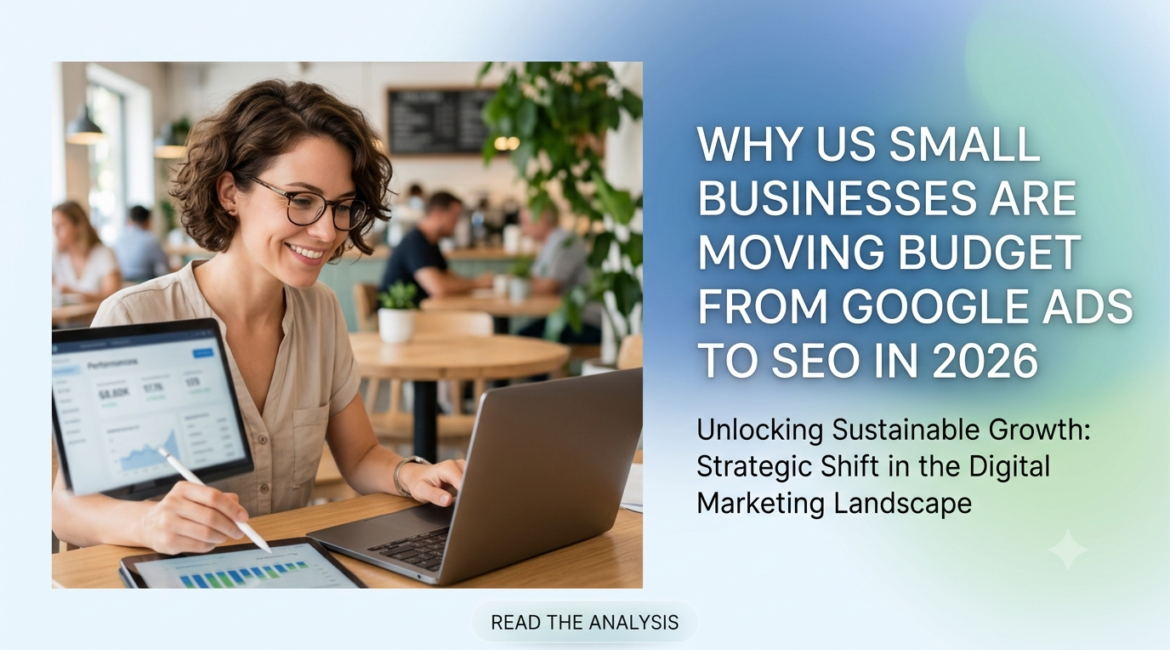
That’s why a growing number of US small business owners are shifting budget from Google Ads to SEO not abandoning paid advertising entirely, but rebalancing toward a channel that builds lasting value. This guide explains why that shift makes financial sense, when it’s the right move, and how to make the transition without losing leads in the process.
Why Google Ads Costs Have Risen for US Small Businesses
Google’s advertising auction is competitive by design. As more businesses bid for the same keywords, the cost per click rises. In high-competition US industries legal, financial, healthcare, home services, real estate cost per click has increased significantly over the past three years.
For small businesses with fixed monthly budgets, rising costs per click mean fewer clicks for the same spend. And because Google Ads stops the moment you pause spending, there’s no residual value no accumulated asset that keeps working when the budget tightens.
SEO operates differently. The work done in month three is still delivering traffic in month eighteen. Rankings earned through good content and a well-structured website compound over time rather than resetting every billing cycle.
Where SEO Outperforms Google Ads Over Time
The economics of SEO vs Google Ads shift significantly depending on your time horizon. In the first three months, Google Ads wins it delivers immediate visibility that SEO can’t match. But from the six-month mark onward, a well-executed SEO campaign typically delivers a lower cost per lead and a higher return on investment.
| A page that ranks on page one for a high-intent search delivers consistent traffic without a per-click cost. That same position earned through Google Ads requires continuous spend to maintain. |
For US small businesses in service categories where customers search with clear intent plumbers, electricians, accountants, therapists, insurance agents organic rankings also carry a trust advantage. Many US consumers deliberately scroll past ads to reach organic results, particularly for considered purchases or service relationships they expect to last.
The Businesses Where the Switch Makes the Most Sense
Not every US business should move budget from ads to SEO at the same time. The switch makes most sense when:
• Your ad spend is consistent but your cost per lead keeps rising.
• You serve customers who research before buying professional services, healthcare, financial products, education.
• You’re in a local service category where Google Maps visibility and organic search drive the majority of enquiries.
• You have a stable business that can sustain a three-to-six month investment period while organic rankings build.
• You’ve been advertising for at least a year and have data showing which keywords and services convert best this data makes your SEO investment significantly more targeted.
If you need leads in the next thirty days, Google Ads is still the faster path. The decision isn’t either/or it’s about where the balance sits given your current situation.
How to Make the Transition Without Losing Leads
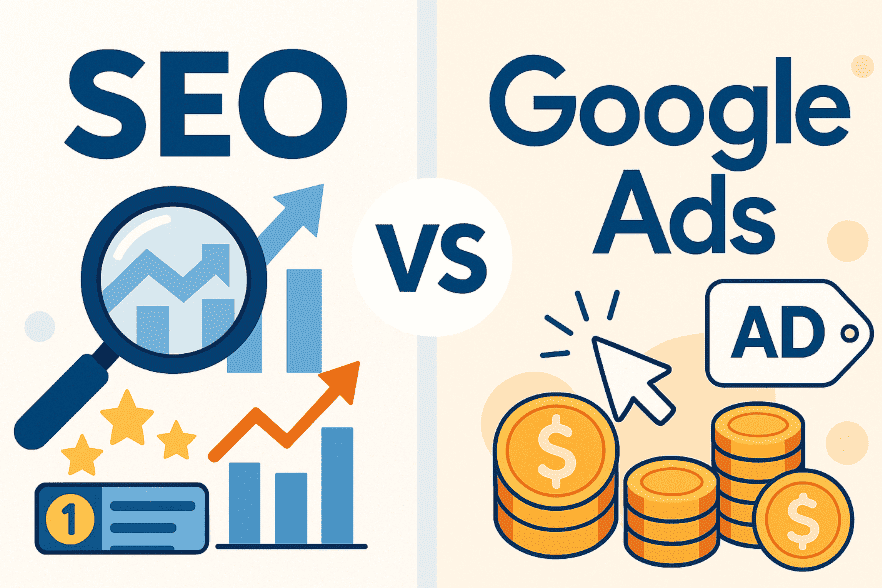
The most common mistake US small businesses make when shifting to SEO is cutting ad spend before organic rankings are in place. This creates a gap where visibility drops sharply and leads dry up.
The smarter approach is a phased transition:
1. Keep Google Ads running at current spend while SEO work begins technical fixes, content improvements, Google Business Profile optimisation
2. At the three-month mark, review which keywords are now ranking organically. Reduce or pause ad spend on those specific terms only
3. Redirect the saved ad budget to new keyword targets or to accelerating the SEO work
4. By month six to nine, organic visibility is typically strong enough to reduce overall ad dependency significantly
For a detailed comparison of how the two channels work and what each costs, see our guide on SEO vs Google Ads for Australian and international businesses.
Running Both Channels During the Transition
The businesses that manage the ads-to-SEO transition most successfully run both channels simultaneously for at least six months. This isn’t inefficient it’s strategic. Paid ads deliver immediate leads while organic rankings build. By the time organic traffic is strong enough to carry more of the load, the business has a clearer picture of which channels deliver the best customers.
At Simba Squad, we manage both Google Ads campaigns and organic SEO for US clients which means the strategy, keyword targeting, and messaging work together rather than pulling in different directions.
Frequently Asked Questions
How long does it take for SEO to replace Google Ads leads?
Most US businesses see meaningful organic traffic growth within three to six months of starting. Replacing ad-dependent lead volume entirely takes longer typically nine to twelve months in competitive categories. The transition is gradual, which is why running both channels simultaneously is recommended.
Will stopping Google Ads hurt my SEO rankings?
No. Google Ads and organic rankings are completely separate systems. Pausing ads has zero impact on where your website ranks in Google’s unpaid results.
Is SEO cheaper than Google Ads for US small businesses?
In the short term, SEO requires upfront investment with a delayed return. Over twelve months or more, most US businesses find that the cost per organic lead is significantly lower than the cost per paid lead — particularly in high-cost-per-click industries like legal, financial, and home services.
What if my industry has high keyword competition for SEO too?
Highly competitive industries require more investment and longer timelines for SEO but the same is true of Google Ads, where competition directly inflates cost per click. In very competitive categories, the long-term case for SEO is actually stronger, because once organic rankings are established they’re more defensible than a paid position.
Can Simba Squad manage this transition for my US business?
Yes. We work with US businesses on both Google Ads management and organic SEO, and can plan a transition strategy based on your current spend, your industry, and your timeline. Get in touch for a free consultation.
Ready to Build Search Visibility That Doesn’t Stop When the Budget Does?
If your Google Ads spend keeps rising but your lead quality isn’t improving, it’s worth having an honest conversation about what a rebalanced strategy could look like for your business.
Simba Squad works with US businesses across industries to build organic search visibility that delivers consistent leads without ongoing per-click cost. Book a free, no-obligation consultation at simbasquad.com/contact let’s look at what’s possible for your business.